

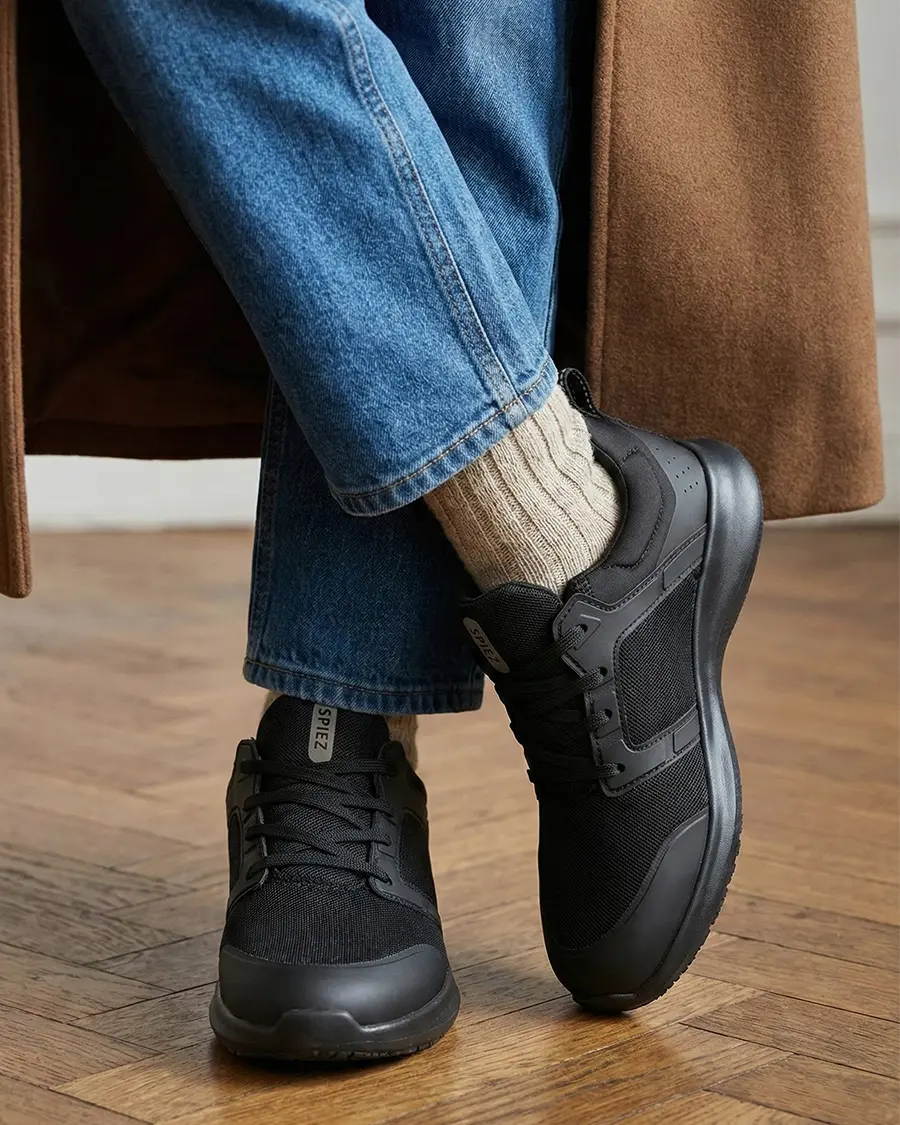
Best Work Shoes for Nurses and Healthcare Workers in 2026
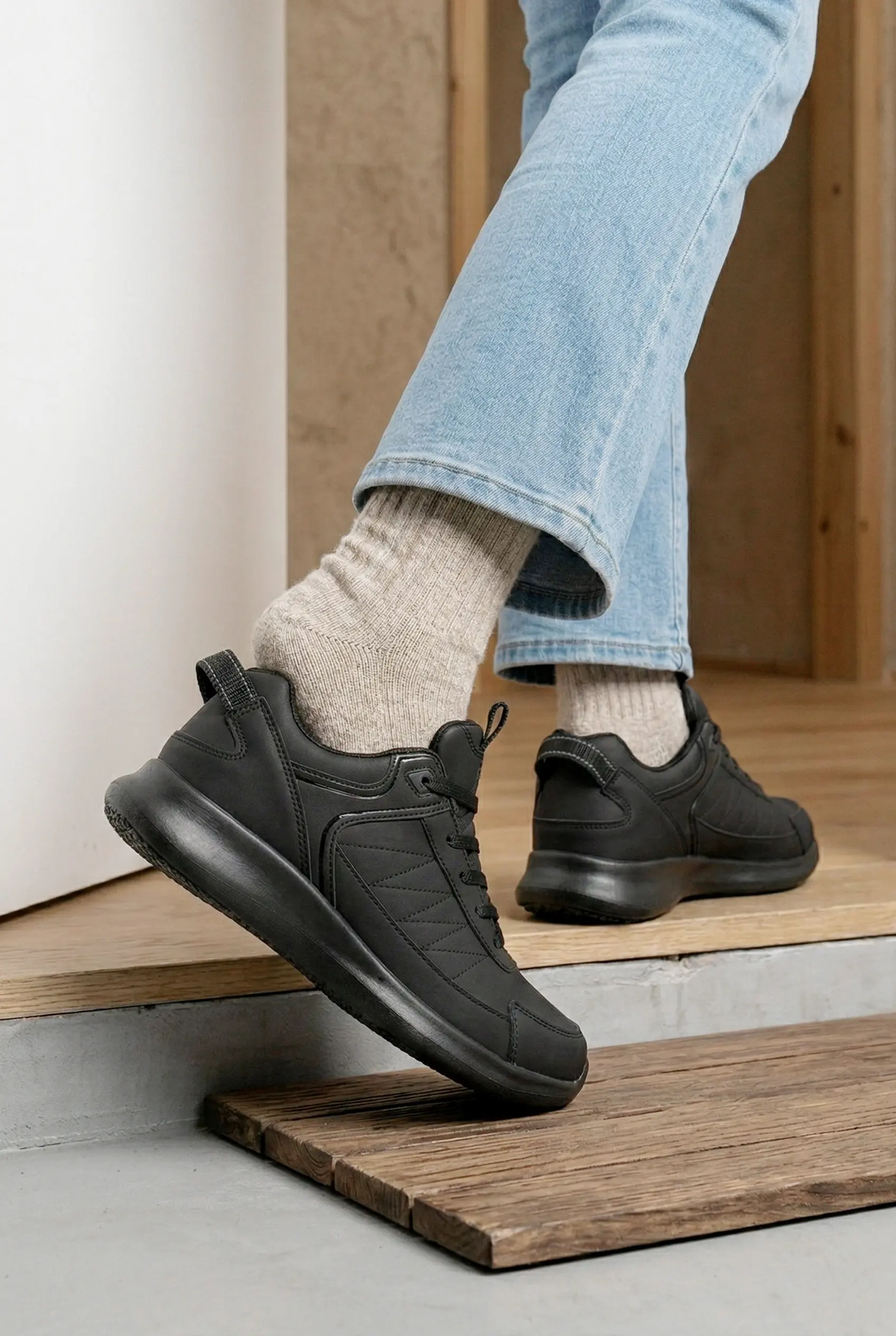
What Healthcare Workers Need From Their Shoes
SRC Slip Resistance
Hospital floors are polished, often wet, and frequently contaminated with fluids. SRC certification means tested on both wet tile and oily surfaces.
All-Day Cushioning
4–5 miles on hard floors requires high-rebound foam (EVA or PU) with at least 10mm of cushioned midsole.
Lightweight Construction
Every gram matters when you're walking miles per shift. Target: under 400g per shoe.
Easy to Clean
Smooth, non-porous surfaces are far easier to decontaminate than fabric or mesh. Critical in clinical environments.
Closed Toe & Heel
OSHA and most hospital policies require closed-toe, closed-heel footwear in clinical areas.
Fluid Resistance
Water-resistant or waterproof uppers protect your feet and make cleanup easier in high-fluid environments.
Top Work Shoes for Nurses from SPIEZ
Geneva 310 (Women's)
Designed on a women's-specific last — the fit is built around female foot anatomy, not just a scaled-down men's shoe. SRC-rated, lightweight, and easy to clean.
- Women's-specific fit reduces foot problems
- SRC-certified for hospital floors
- Lightweight — under 350g per shoe
- Easy-clean surface
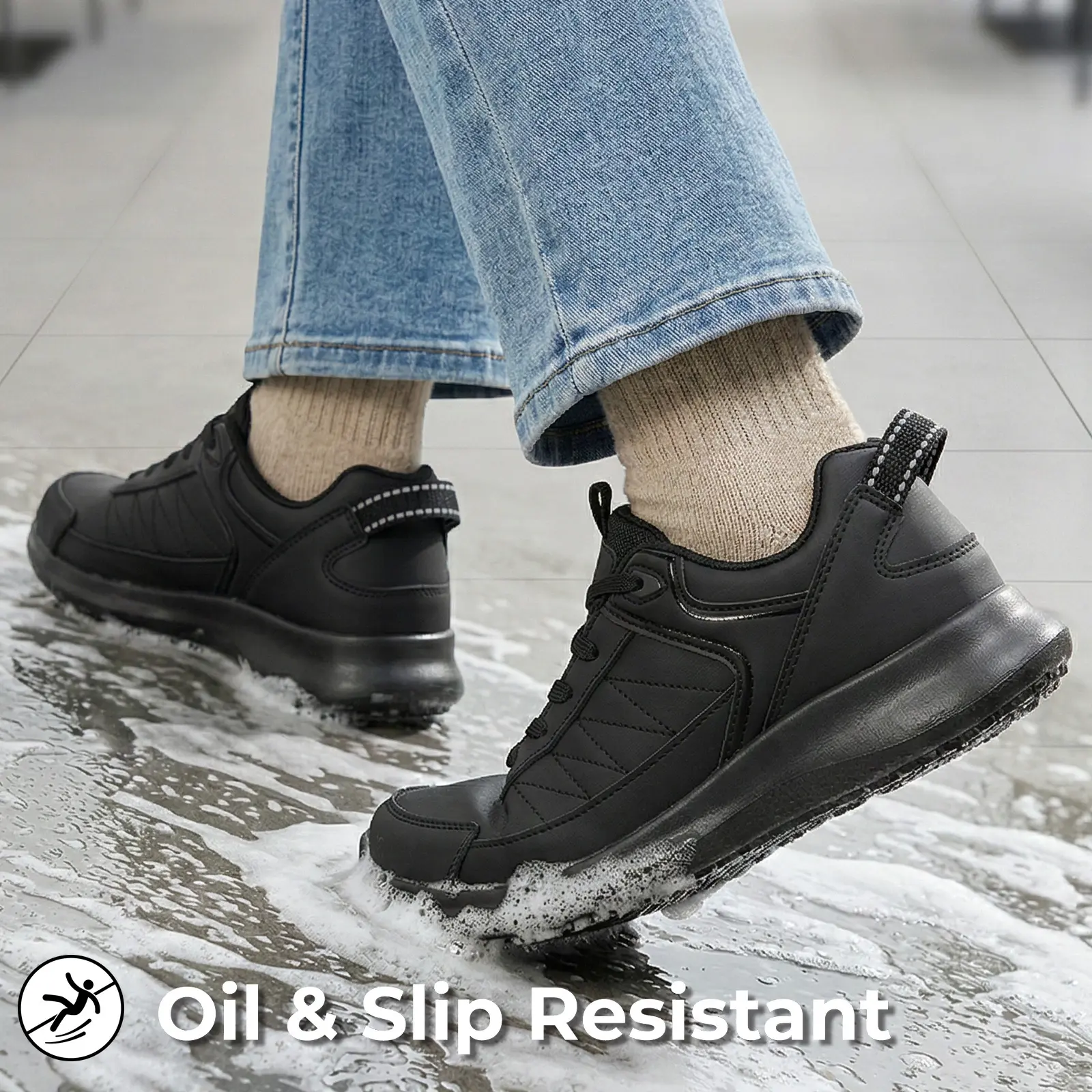
Geneva 310 White (Women's)
Same shoe as the 310, specifically in white. Many hospitals require white footwear — this delivers the professional look with full SRC slip protection.
- Clean white design for clinical settings
- Full SRC slip resistance
- BernCore Foam™ cushioning
- Easy to wipe clean between patients
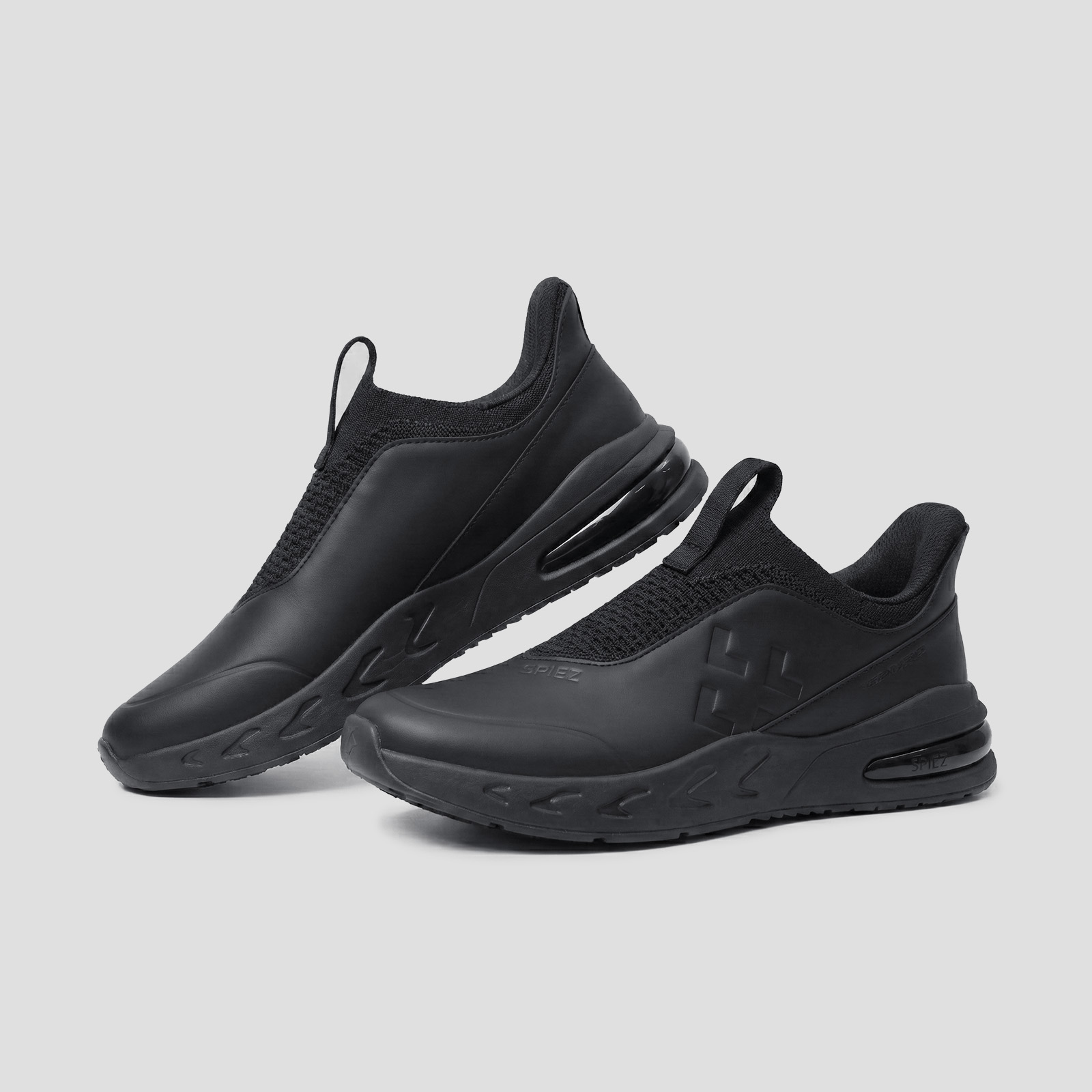
Geneva 409 (Women's)
Waterproof construction for nurses in high-fluid environments (ER, OR, ICU). The waterproof upper provides an extra layer of protection against spills and splashes.
- Waterproof upper for fluid-heavy environments
- SRC slip resistance
- BernCore Foam™ cushioning for 12-hour shifts
- Lightweight and breathable
-0.jpg?h=1600&q=80&w=1600)
Geneva 408 (Men's)
The men's equivalent of the 409. Waterproof, SRC-rated, and cushioned for long shifts. Slip-on design means no laces to come untied during a busy shift.
- Waterproof HydroGuard mesh upper
- SRC-certified slip resistance
- Slip-on — no laces to worry about
- BernCore Foam™ all-day cushioning
Common Nursing Foot Problems & Prevention
| Condition | Cause | Prevention |
|---|---|---|
| Plantar Fasciitis | Prolonged standing on hard floors | Proper arch support + cushioned midsole |
| Metatarsalgia | Pressure concentration in ball of foot | Full-footbed cushioning + wide toe box |
| Shin Splints | Inadequate shock absorption | High-rebound midsole foam |
| Lower Back Pain | Poor foot mechanics, flat feet | Arch support + orthotics if needed |
Frequently Asked Questions
What are the best shoes for nurses who are on their feet all day?
The best nursing shoes combine SRC-certified slip resistance, lightweight construction (under 400g), and high-rebound cushioning. The SPIEZ Geneva 310 or 408 offer the best combination of comfort and safety for long shifts.
Do nurses need special shoes?
Yes. Regular athletic shoes lack the SRC slip certification required for hospital floors and the fluid resistance needed in clinical environments.
Are white shoes required for nurses?
Requirements vary by employer. The SPIEZ Geneva 310 White is designed for facilities that require white footwear.
How often should nurses replace their work shoes?
Nurses doing 3–4 shifts per week should replace their shoes every 6–9 months. When the shoe no longer provides cushioning, it's time to replace regardless of how the upper looks.