

.jpg?w=1600&h=1600)
How to Choose Safety Shoes for Construction: The Complete 2026 Guide
.jpg?w=1856&h=2304)
Safety Standards You Need to Know
ASTM F2413 (United States)
| Code | Protection | What It Means |
|---|---|---|
| I/75 | Impact | Toe cap withstands 75 ft-lbs of impact |
| C/75 | Compression | Toe cap withstands 2,500 lbs |
| EH | Electrical Hazard | Insulates against open circuits up to 18,000V |
| PR | Puncture Resistant | Midsole plate protects against nail penetration |
EN ISO 20345 (Europe & International)
| Level | Includes |
|---|---|
| S1 | Basic toe + closed heel + antistatic + energy absorption |
| S2 | S1 + water resistance |
| S3 ✓ | S2 + puncture resistance + cleated outsole — Recommended for construction |
5 Features That Actually Matter on a Construction Site
1. Composite Toe Protection
ShieldX™ composite toe — 60% lighter than steel, same 200J protection. Non-conductive for electrical safety.
2. Puncture-Resistant Midsole
Stepping on a nail is one of the most common construction injuries. A PR-rated midsole plate prevents penetration.
3. SRC Slip-Resistant Outsole
Wet concrete, muddy ground, oily surfaces — your outsole needs SRC certification for both wet and oily surfaces.
4. Ankle Support
Mid-cut boots (6–8 inches) provide the best balance of ankle support and mobility for uneven terrain.
5. Waterproofing
Rain, puddles, wet concrete — waterproof boots keep feet dry. Wet feet lose heat 25x faster.
6. Lightweight Construction
Every 100g saved = 1,500 kg less cumulative effort per 15,000-step shift. Weight matters enormously.
Best Construction Safety Shoes from SPIEZ
Grindelwald 371 — Safety Boot
Mid-cut safety boot with composite toe, aggressive outsole, and waterproof construction. The workhorse of the SPIEZ lineup for demanding job sites.
- ShieldX™ composite toe — 200J rated
- Waterproof construction
- Aggressive SRC-rated outsole
- Ankle support for uneven terrain
.jpg?w=1856&h=2304)
Grindelwald 371A — Premium Safety Boot
Enhanced waterproofing and reinforced construction for the toughest job sites. When conditions are extreme, this is the boot.
- Enhanced waterproof membrane
- Reinforced toe and heel areas
- Maximum ankle protection
- Full EN ISO 20345 S3 SRC compliance
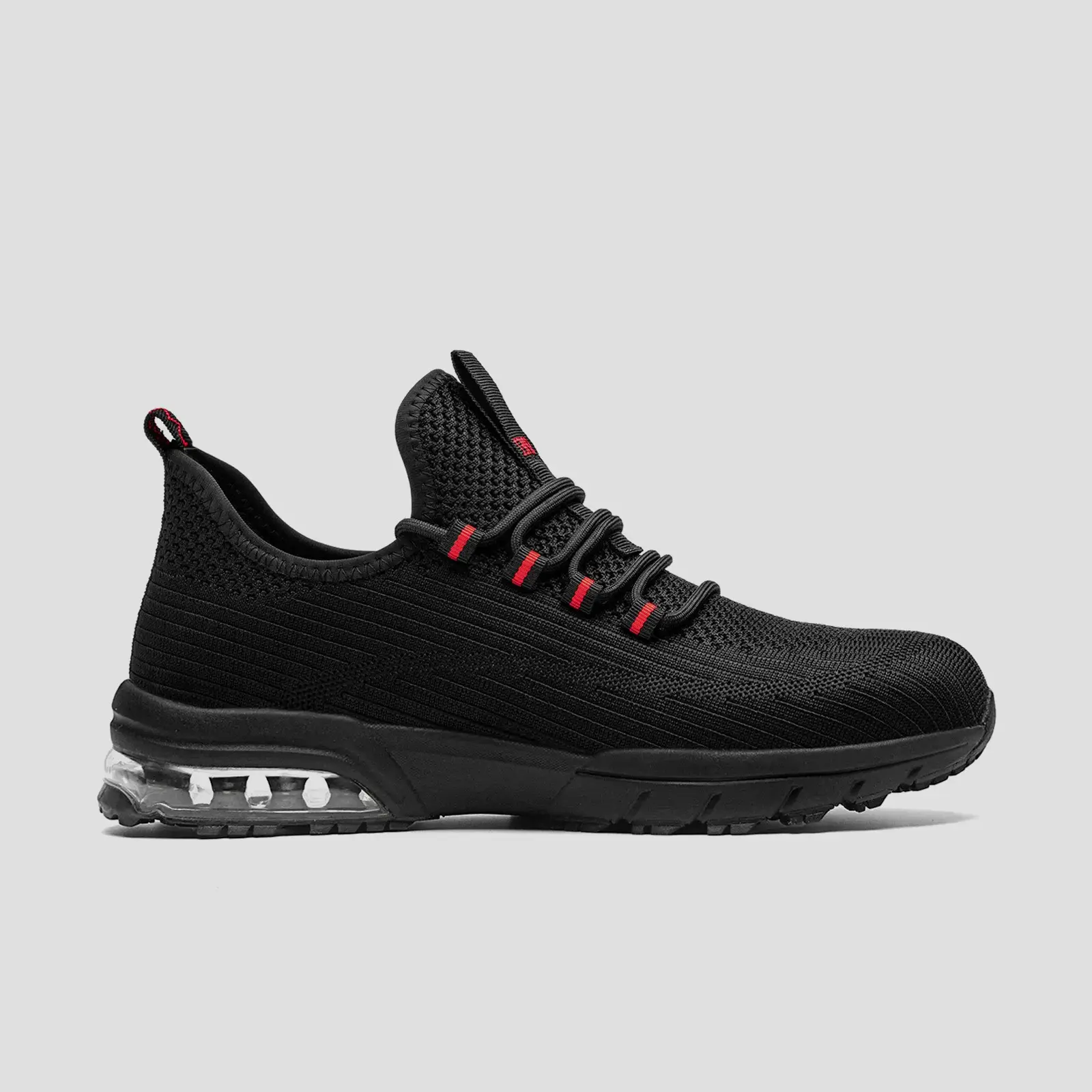
Geneva 060B — Composite Toe Safety Shoe
Low-cut composite toe safety shoe with maximum breathability. For indoor renovation, electrical work, and warm-weather sites.
- Breathable design for indoor work
- ShieldX™ composite toe
- SRC slip resistance
- Non-conductive — safe for electrical work
Frequently Asked Questions
What safety shoes are required for construction?
OSHA requires construction workers to wear safety-toe footwear meeting ASTM F2413 I/75 C/75 at minimum. Most sites also require PR (puncture resistance) and EH (electrical hazard) ratings.
Are composite toe boots OSHA approved for construction?
Yes. OSHA does not specify the material of the toe cap — only that it meets ASTM F2413 impact and compression standards. Composite toe boots with I/75 C/75 rating are fully OSHA compliant.
How often should construction workers replace safety boots?
Most construction safety boots should be replaced every 6–12 months with daily use. Key signs: worn-smooth outsole tread, separated seams, or compressed midsole with no cushioning.
What's the difference between S1, S2, and S3 safety shoes?
S1 provides basic toe protection. S2 adds water resistance. S3 adds puncture-resistant midsole and cleated outsole. For construction, S3 is recommended.