

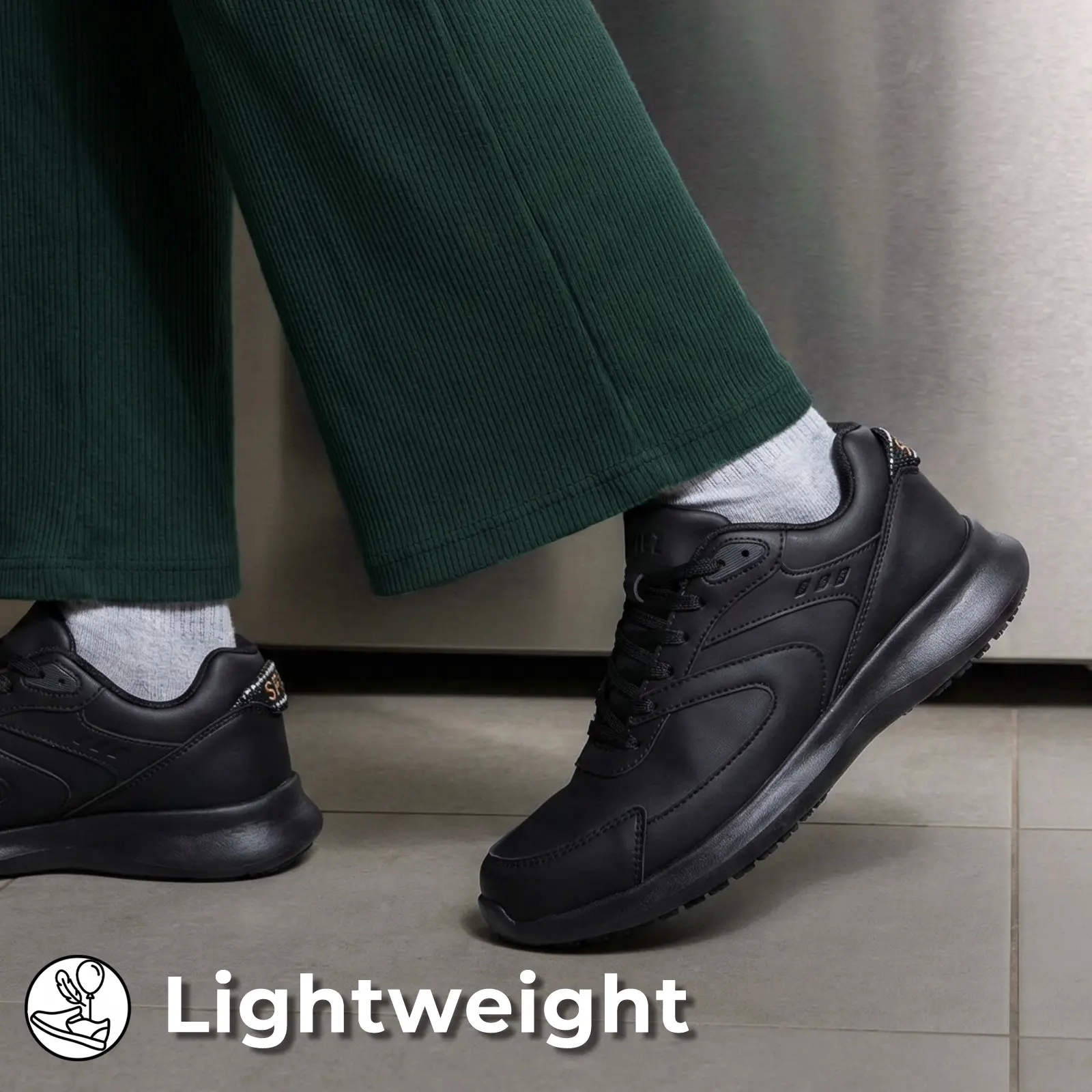
Best Lightweight Safety Shoes for Standing All Day in 2026
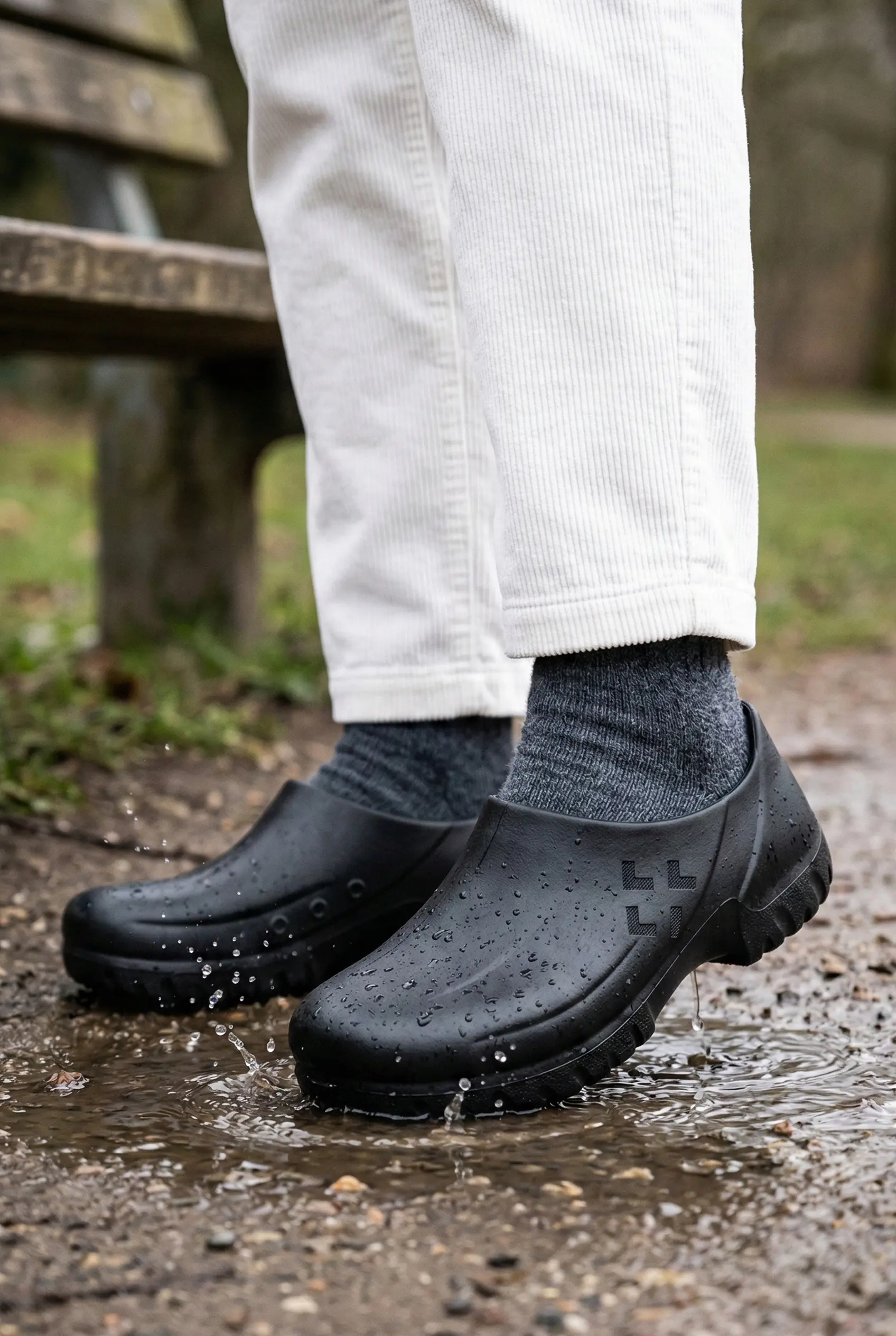
5 Features That Matter Most for All-Day Standing
1. Midsole Cushioning
High-rebound foam (EVA or PU) absorbs impact and returns energy. Minimum 10mm thickness. SPIEZ BernCore Foam™ maintains cushioning through a full 12-hour shift.
2. Arch Support
Distributes weight evenly, reduces plantar fascia strain. Look for firm (not soft) arch support — soft support collapses under body weight.
3. Lightweight Construction
Target under 400g per shoe. The difference between 600g and 350g shoes = 2,500 kg less cumulative effort per shift.
4. Heel-to-Toe Drop
6–8mm drop is the sweet spot for all-day standing — reduces Achilles strain while maintaining natural posture.
5. Wide Toe Box
Feet swell after 8 hours. A cramped toe box causes blisters and neuromas. Consider going half a size up for all-day standing.
6. SRC Slip Resistance
Fatigue increases slip risk. SRC-certified outsoles provide maximum grip on wet and oily surfaces — critical when you're tired.
Best Lightweight Work Shoes for Standing All Day
-0.jpg?h=1600&q=80&w=1600)
Geneva 408 — Lightweight Work Shoe
At approximately 340g per shoe — running shoe territory. BernCore Foam™ midsole holds up through a full 12-hour shift. Slip-on design eliminates lace pressure points.
- ~340g per shoe — ultra lightweight
- BernCore Foam™ all-day cushioning
- SRC-certified slip resistance
- Waterproof HydroGuard upper
Geneva 417 — Ultra-Lightweight Work Shoe
The lightest shoe in the SPIEZ lineup at ~330g per shoe. Prioritizes weight reduction above all else — ideal for workers who need maximum mobility and minimum fatigue.
- ~330g per shoe — lightest in lineup
- SRC-certified outsole
- Breathable mesh upper
- Under $90
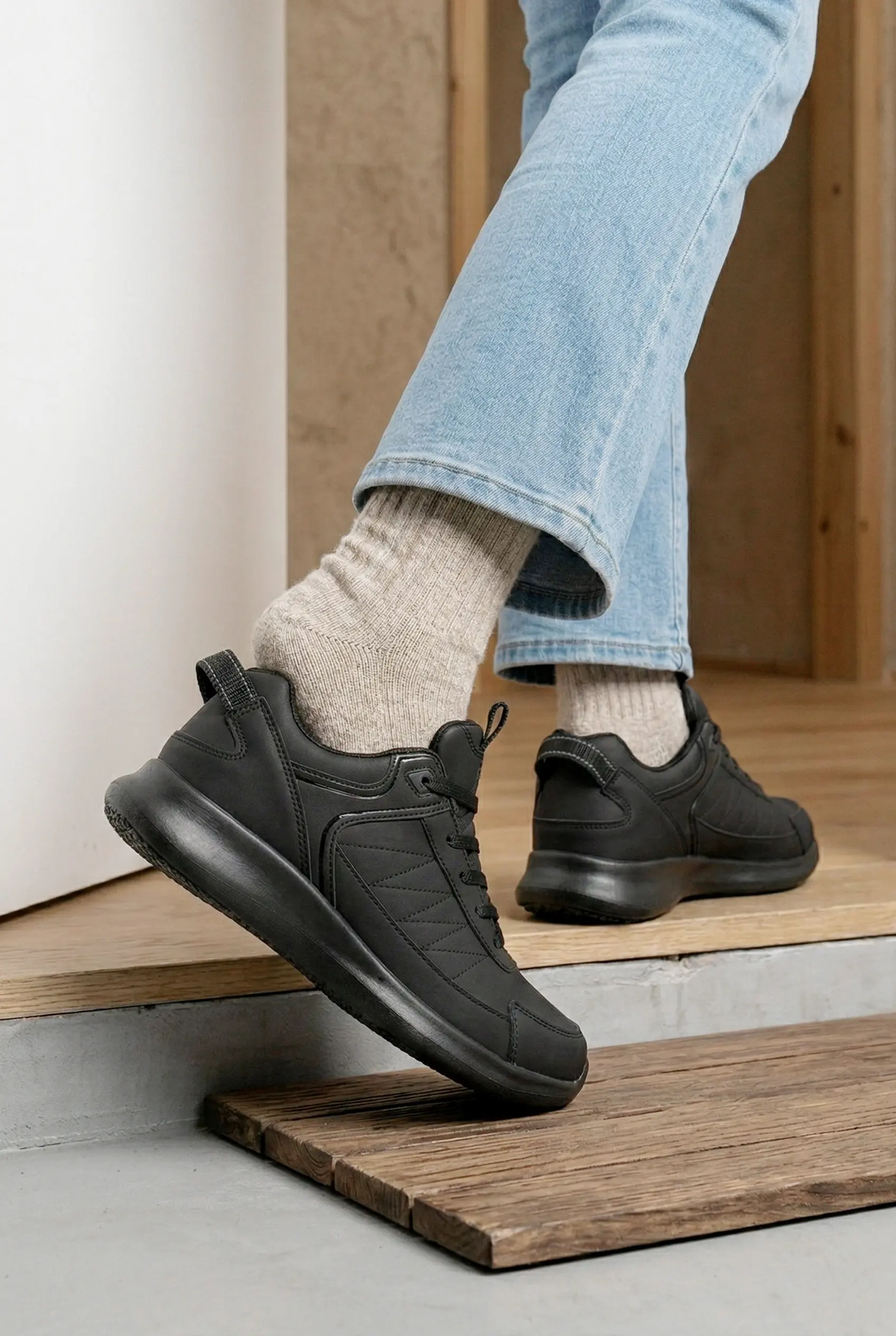
Geneva 310 (Women's) — Lightweight Work Shoe
Women's-specific construction at ~310g — one of the lightest work shoes available for women. Designed around female foot anatomy for all-day comfort.
- ~310g — lightest women's option
- Women's-specific fit
- BernCore Foam™ cushioning
- SRC slip resistance
.jpg?h=1600&q=80&w=1600)
Matterhorn Arch Support Insoles
Even the best factory insoles compress over time. The Matterhorn insoles restore cushioning and add contoured arch support — the highest-ROI upgrade most workers overlook.
- Contoured arch support for flat feet and high arches
- Heel cup for stability and shock absorption
- Metatarsal pad reduces ball-of-foot pressure
- Compatible with all SPIEZ shoes
Frequently Asked Questions
What are the best shoes for standing on concrete all day?
For standing on concrete, prioritize maximum cushioning (BernCore Foam™ or equivalent), arch support, and lightweight construction. The SPIEZ Geneva 408 is specifically designed for this use case.
Do lightweight shoes provide less protection?
Not necessarily. Modern composite materials provide the same protection as steel at significantly less weight. Lightweight construction comes from material innovation, not reduced protection.
How do I know if my work shoes have enough cushioning?
Press your thumb firmly into the midsole. If it compresses easily and doesn't spring back, the cushioning is worn out. If your feet hurt after 4 hours, the cushioning is inadequate.
Should I size up for all-day standing?
Many workers benefit from going half a size up, as feet swell throughout the day. Try shoes on in the afternoon and ensure there's about a thumb's width of space between your longest toe and the end of the shoe.
How often should I replace work shoes for standing jobs?
For workers standing 8+ hours daily, replace shoes every 6–9 months. The midsole compresses with use — even if the upper looks fine, worn-out cushioning causes fatigue and injury.