

# Best Safety Shoes for Warehouse Workers in 2026: A Complete Guide
*Last updated: March 2026 | Reading time: 8 min*
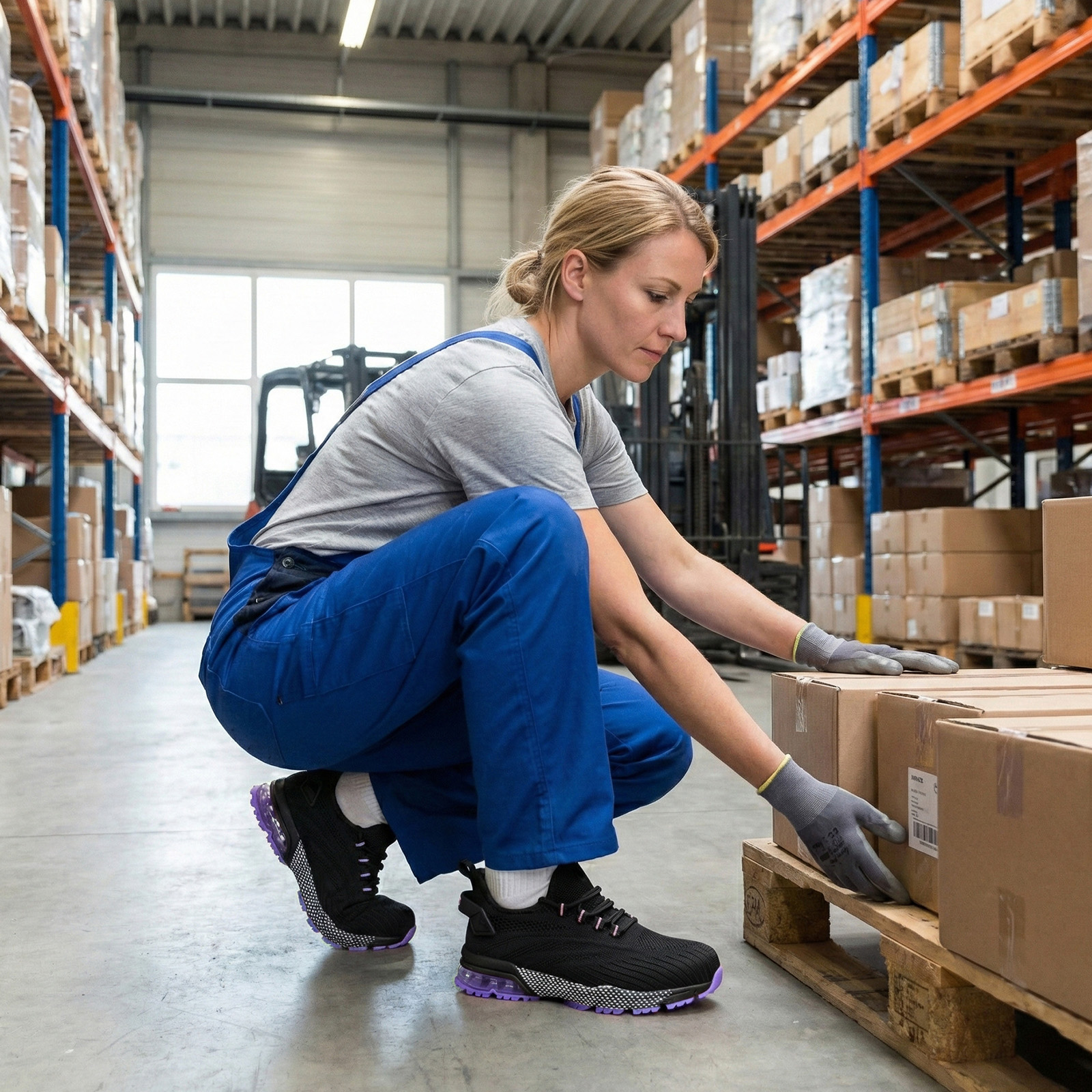
Warehouse work is no joke. You're on your feet 8–12 hours a day, dodging forklifts, lifting heavy loads, and walking on surfaces that could send you sliding if your shoes aren't up to the task. The right pair of safety shoes isn't a luxury — it's the difference between going home safe and a trip to the ER.
We've tested and researched dozens of options to bring you the best safety shoes for warehouse workers in 2026. Whether you're picking orders at a fulfillment center or managing inventory in a distribution hub, this guide has you covered.
## What to Look for in Warehouse Safety Shoes
.jpg?w=900&h=1125)
Before we get into our picks, here's what actually matters:
### 1. Toe Protection (Composite vs. Steel)
ASTM F2413 and EN ISO 20345 are the two standards you'll see. Both require the toe cap to withstand 200 joules of impact. The real question is: steel or composite?
- **Steel toe**: Traditional, slightly thinner profile, conducts cold
- **Composite toe**: 30–60% lighter, doesn't conduct heat or electricity, won't set off metal detectors
For warehouse work, composite toe is the clear winner. You're walking all day — every gram matters.
### 2. Slip Resistance (SRC Rating)
Warehouse floors get wet, oily, and dusty. Look for shoes rated SRC (slip resistant on both ceramic and steel surfaces with water and oil). This is non-negotiable.
### 3. Weight
Here's a stat that might surprise you: the average warehouse worker walks 8–12 miles per shift. Heavy boots will destroy your feet, knees, and back over time. Target shoes under 1.5 lbs per shoe.
### 4. Cushioning and Support
Standing on concrete all day requires serious midsole technology. Look for PU or EVA foam with high energy return — the kind of cushioning you'd find in running shoes.
### 5. Breathability
Warehouses aren't always climate-controlled. Breathable uppers and moisture-wicking linings keep your feet dry and comfortable.
## Our Top Picks for 2026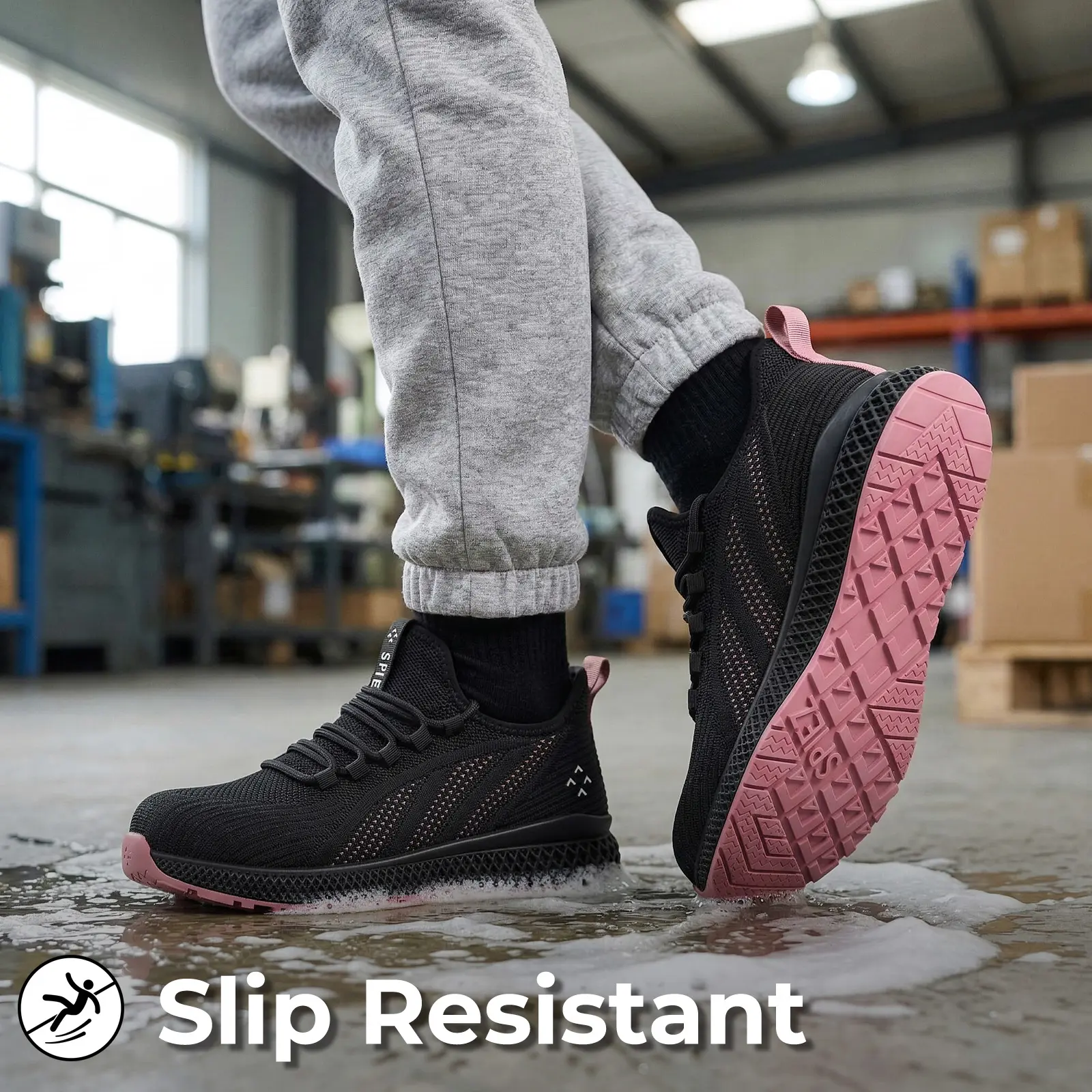
### ⭐ Best Overall: SPIEZ Geneva S1P Safety Shoe
The Geneva S1P is what happens when you design a safety shoe like a sneaker. At just 0.63 lbs per shoe (size 8), it's one of the lightest composite toe safety shoes on the market.
**Why we like it:**
- ShieldX™ composite toe cap — 60% lighter than steel, meets ASTM F2413 and EN ISO 20345
- BernCore Foam™ midsole — Running-shoe-level cushioning with high energy return
- Wunder Grip™ SRC outsole — Multi-directional tread pattern for grip on any surface
- Breathable knit upper — Keeps feet cool during long shifts
**Best for:** Workers who prioritize comfort and lightweight feel without compromising protection.
### Best Budget Option: Skechers Work Flex Advantage
Skechers has been a reliable name in work shoes for years. The Flex Advantage offers decent slip resistance at a lower price point.
**Why we like it:** Affordable, widely available, memory foam insole.
**Trade-offs:** Heavier than composite toe options, less impact protection.
### Best for Heavy-Duty: Timberland PRO Morphix Composite Toe
Timberland PRO is a legacy brand in work footwear. The Morphix brings modern comfort to their proven safety platform.
**Why we like it:** Trusted brand, waterproof, excellent durability.
**Trade-offs:** Heavier, higher price point, boot-style may be overkill for indoor warehouse work.
## Composite Toe vs. Steel Toe: Which Is Better for Warehouse Work?
| Feature | Composite Toe | Steel Toe |
| Weight | 30–60% lighter | Heavier |
| Temperature | Doesn't conduct heat/cold | Gets cold in winter, hot in summer |
| Metal detectors | Won't trigger | Will trigger |
| Impact protection | Meets same ASTM/ISO standards | Meets same standards |
| Electrical hazard | Non-conductive | Conductive |
**Verdict:** For warehouse work, composite toe wins on every practical measure.
## How to Break In Your New Safety Shoes
1. **Wear them at home first** — Walk around the house for 2–3 days before wearing them to work
2. **Use thick socks initially** — Helps prevent blisters during break-in
3. **Don't skip the insole** — Consider upgrading to a custom orthotic
4. **Rotate pairs** — Alternate between two pairs to extend lifespan
## Safety Standards Explained
- **ASTM F2413** — American standard for protective footwear
- **EN ISO 20345** — European standard for safety footwear (S1, S1P, S2, S3)
- **SRC** — Slip resistance on both ceramic tile and steel floor
- **ESD** — Electrostatic discharge protection
## The Bottom Line
The best safety shoe for warehouse work in 2026 is one that protects you without slowing you down. Heavy, clunky boots are a thing of the past. Modern composite toe shoes like the SPIEZ Geneva deliver the same protection at a fraction of the weight — and your feet will thank you at the end of every shift.
**Ready to upgrade?** [Browse SPIEZ safety shoes →](https://spiezcollection.com/collections/safety-shoes-all)
*SPIEZ — Built for the Ones Who Build*