

(1)-3.jpg?w=900&h=873)
Cada día, casi 11,000 incidentes de resbalones y caídas ocurren solo en restaurantes estadounidenses. Una sola lesión por resbalón en el lugar de trabajo promedia más de $40,000 en costos directos. En todas las industrias, los resbalones, tropiezos y caídas le cuestan a los empleadores miles de millones anualmente, y el Índice de Seguridad en el Lugar de Trabajo de Liberty Mutual de 2024 los señaló como una de las principales causas de lesiones incapacitantes en el trabajo.
El par adecuado de zapatos de trabajo antideslizantes no es una elección de comodidad. Es una decisión financiera y de seguridad que te protege a ti, a tu equipo y a tu rentabilidad.
### Los números no mienten
- **11,000** incidentes de resbalones y caídas por día en restaurantes de EE. UU.
- **$40,000+** costo directo promedio por lesión por resbalón/caída
- **$2 mil millones+** costo anual solo para la industria de la hospitalidad
- **4.5x** más en pérdidas pagadas en comparación con otras lesiones laborales
- Las lesiones por resbalones requieren **el doble de días de recuperación** que otros incidentes
Las normas de superficies de trabajo y de caminata de OSHA (29 CFR Parte 1910, Subparte D) cubren la mayoría de los peligros de resbalones. Un fabricante de Texas fue multado con **$299,591** por exponer a los empleados a peligros de resbalones y caídas. Esto no es opcional.
### ¿Qué hace que un zapato sea realmente antideslizante?
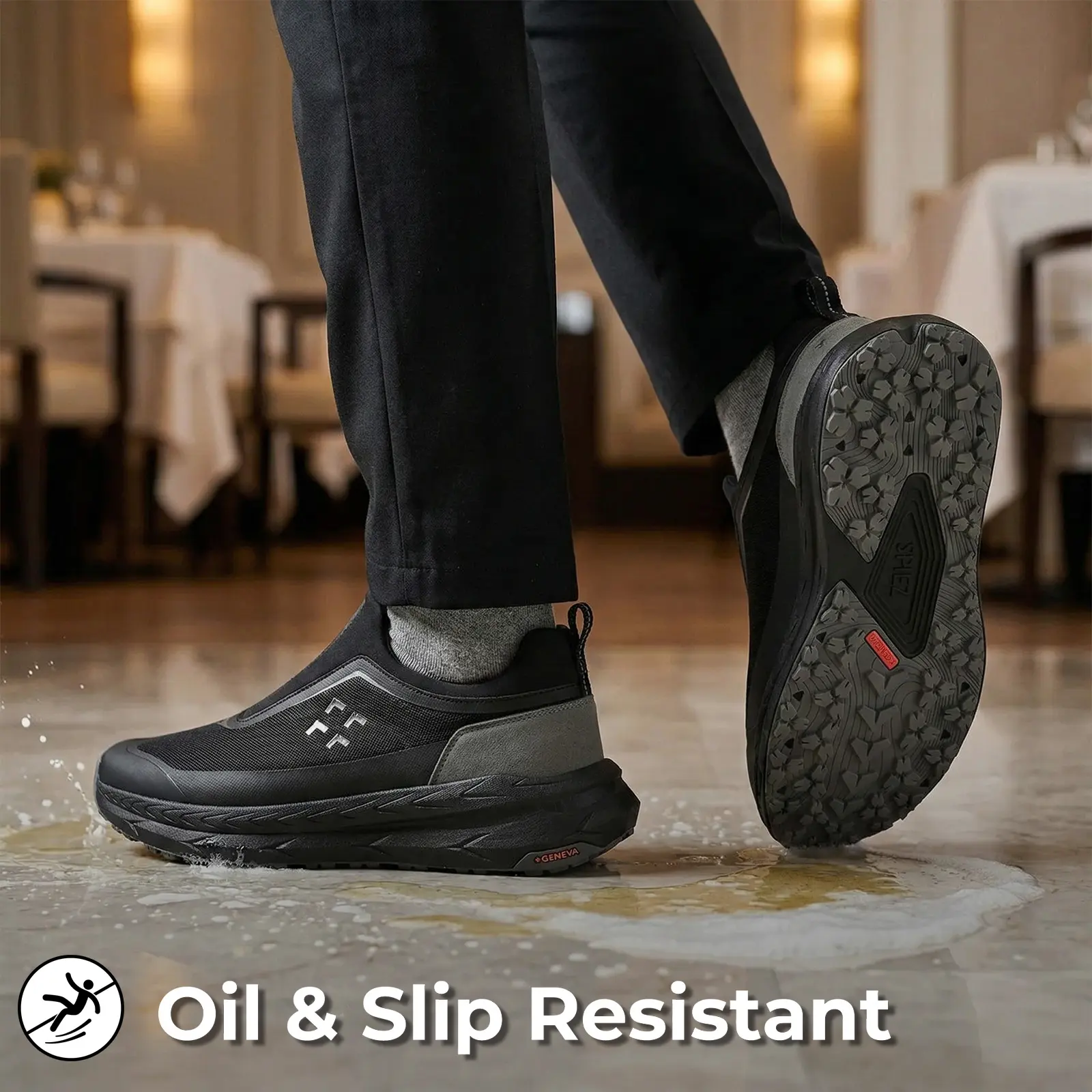
No todos los zapatos "antideslizantes" son iguales. La verdadera resistencia al deslizamiento se reduce a tres cosas:
**1. Compuesto de la suela exterior**
La fórmula de goma determina la adherencia en superficies húmedas y aceitosas. Los zapatos antideslizantes de alta calidad utilizan goma especialmente formulada con un coeficiente de fricción más alto. Los zapatos baratos se sienten adherentes en baldosas secas, pero fallan en un suelo de cocina cubierto de aceite de cocina.
**2. Patrón de la banda de rodadura**
Los tacos multidireccionales canalizan los líquidos lejos de la superficie de contacto, como las bandas de rodadura de los neumáticos en carreteras mojadas. Las ranuras profundas y los patrones circulares mantienen el contacto con el suelo donde es importante.
**3. Superficie de contacto**
Más goma en el suelo = más agarre. Algunos zapatos parecen agresivos con tacos profundos, pero en realidad tienen menos contacto con la superficie. Los mejores diseños equilibran la profundidad del dibujo con el área de contacto.
---
### Comprensión de las certificaciones de resistencia al deslizamiento
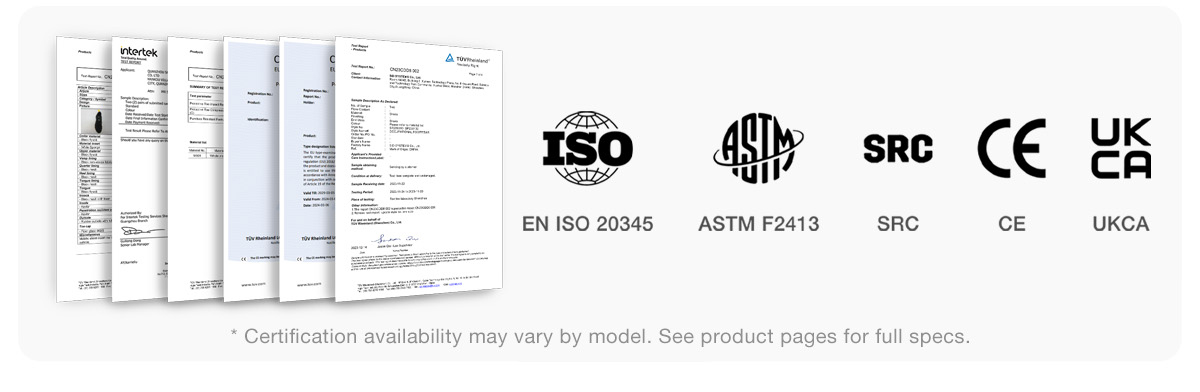
**Clasificación SRC (Norma Europea EN ISO 20345/20347) — El Estándar de Oro**
| Calificación | Superficie de prueba | Simula |
| SRA | Azulejo cerámico + jabón diluido | Pisos de cocina húmeda/hospital |
| SRB | Acero + glicerol | Superficies industriales aceitosas |
| SRC | Pasa TANTO SRA como SRB | Todas las superficies resbaladizas comunes ✅ |
Si ves "certificado SRC", ha sido probado y demostrado en superficies húmedas y aceitosas. Esta es la calificación que deseas.
**ASTM F2913 (Norma estadounidense)**
El método de prueba estadounidense para medir el coeficiente de fricción en superficies de pasarelas. Aunque OSHA no exige un estándar específico de resistencia al deslizamiento, los gerentes de seguridad buscan cada vez más calzado probado según ASTM F2913.
**ASTM F2413 (Calzado de seguridad)**
Para trabajos que necesitan resistencia al deslizamiento Y características de seguridad:
- **I/75 C/75** — Protección contra impactos y compresión (puntera de seguridad)
- **EH** — Protección contra riesgos eléctricos (hasta 18kV en seco)
- **PR** — Resistencia a la perforación
- **SR** — Resistencia al deslizamiento
### Nuestras mejores opciones por tipo de trabajo
#### ⭐ Mejor para Restaurante y Cocina: SPIEZ Geneva SRC Zapato de Trabajo
(1).jpg?w=1600&h=1600)
Diseñado desde cero para profesionales del servicio de alimentos.
**Por qué destaca:**
- Suela Wunder Grip™ SRC — Probada en cerámica húmeda Y acero aceitoso
- BernCore Foam™ media suela — Amortiguación de zapatillas de correr que no se aplana después de 6 meses
- Parte superior de microfibra impermeable: el aceite, el agua y los restos de comida se deslizan fácilmente.
- Ultraligeras: menos de 450 gramos por zapato.
- Fácil de limpiar: límpielo al final del turno.
**Mejor para:** Cocineros, camareros, gerentes de cocina, baristas, personal de hotel
#### ⭐ Mejor para enfermeras y profesionales de la salud: SPIEZ Geneva SRC (Blanco)
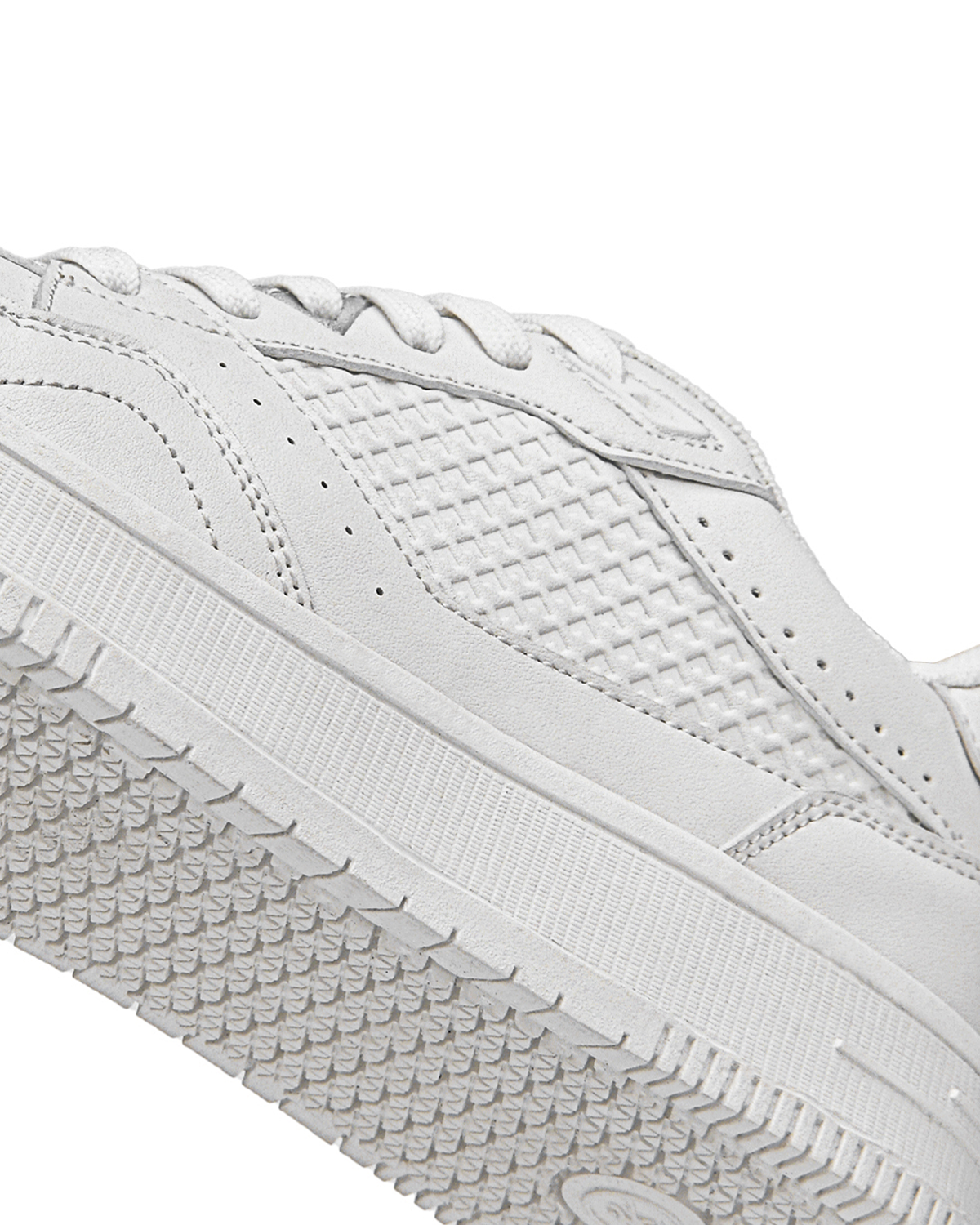
La misma plataforma de eficacia probada, ahora con una gama de colores apta para el sector sanitario.
**Por qué les encanta a las enfermeras:**
- SRC resistencia al deslizamiento en suelos de hospital recién fregados
- BernCore Foam™ absorbe el impacto durante turnos de 12 horas
- Materiales amigables con los antimicrobianos — fáciles de desinfectar
- Diseño sin cordones: sin agujetas que contaminen o se desaten
- La combinación de color blanco cumple con la mayoría de los códigos de vestimenta en el sector salud.
**Mejor para:** enfermeras, asistentes de enfermería certificados, higienistas dentales, técnicos de laboratorio, farmacéuticos
#### ⭐ Mejor para Almacén y Construcción: SPIEZ Grindelwald S1P
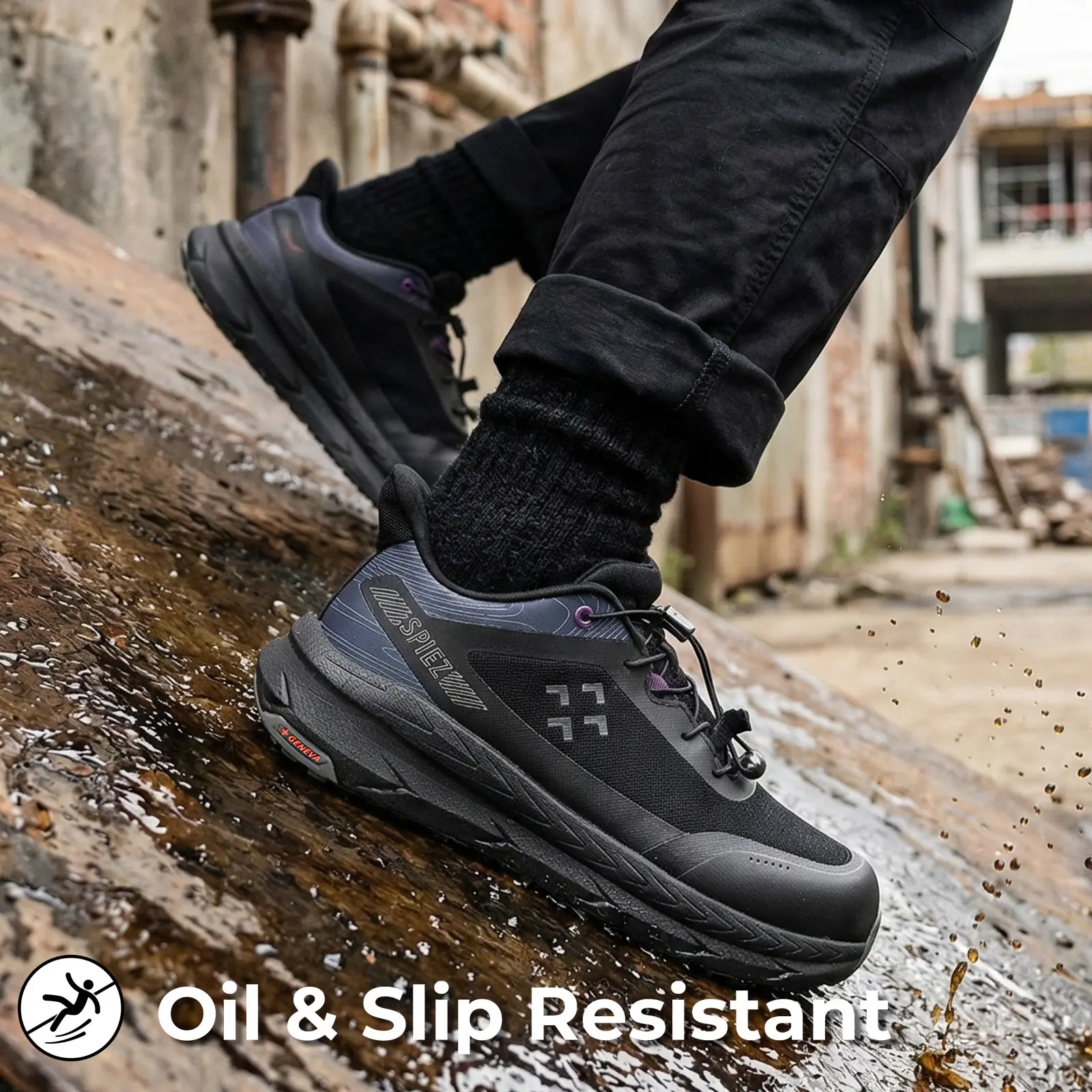
Cuando necesitas resistencia al deslizamiento Y protección completa de seguridad.
**Por qué destaca:**
- ShieldX™ punta compuesta — 60% más ligera que el acero, no conductora
- Suela Wunder Grip™ SRC — Agarra el concreto mojado, el barro y el metal aceitoso
- Membrana transpirable e impermeable AquaFlex™ — Pies secos en cualquier clima
- Suela intermedia anti-perforación de Kevlar — Los clavos y los escombros no pueden atravesar
- Clasificación EH — Protección contra riesgos eléctricos de hasta 18kV
**Mejor para:** Trabajadores de almacén, equipos de construcción, electricistas, mecánicos, logística
### Cómo nos comparamos
| Característica | SPIEZ Ginebra SRC | Zapatos para Crews Revolution II | Skechers Work SR | Hoka Bondi SR |
| Certificado por SRC | ✅ Sí | ✅ Sí | ❌ No | ❌ No |
| Impermeable | ✅ Completo | ⚠️ Resistente al agua | ❌ No | ❌ No |
| Peso (por zapato) | < 1 libra | ~1,1 libras | ~1 libra | ~1,3 libras |
| Tecnología de amortiguación | ⭐⭐⭐⭐⭐ | ⭐⭐⭐ | ⭐⭐⭐ | ⭐⭐⭐⭐⭐ |
| Durabilidad (promedio) | Más de 12 meses | 8-10 meses | 4-6 meses | 10-12 meses |
| Lo mejor para | Todos los trabajos de servicio | Solo para la cocina | Opción económica | Máxima amortiguación |
**La conclusión:** SPIEZ Ginebra SRC ofrece certificación SRC + impermeabilización + amortiguación premium al precio más bajo. Skechers es más barato a corto plazo, pero necesita ser reemplazado el doble de veces. Hoka es excelente para la amortiguación, pero cuesta 3 veces más y carece de certificación de resistencia al deslizamiento.
### Selección por sector

**🍳 Restaurante y servicio de comidas**
Peligros clave: Aceite de cocina, agua, restos de comida en la losa
Prioridad: Resistencia al aceite + impermeable + fácil de limpiar
→ **SPIEZ Ginebra SRC (Negro)** — Calificado SRC en superficies aceitosas
**🏥 Atención sanitaria y enfermería**
Peligros clave: pisos mojados, fluidos corporales, turnos de 12 horas
Prioridad: Amortiguación + desinfectable + ligero
→ **SPIEZ Ginebra SRC (Blanco)** — BernCore Foam™ para soporte durante todo el día
**📦 Almacén y logística**
Peligros clave: Derrames de petróleo, muelles húmedos, objetos pesados, superficies irregulares
Prioridad: Protección de los dedos + resistencia al deslizamiento + durabilidad
→ **SPIEZ Grindelwald S1P** — Punta compuesta + SRC + impermeable
**🔧 Construcción y oficios**
Peligros clave: Concreto mojado, barro, escombros metálicos, eléctrico
Prioridad: Paquete de seguridad completo + banda de rodadura agresiva
→ **SPIEZ Grindelwald S1P** — clasificado EH + resistente a perforaciones + SRC
**🛒 Comercio minorista y hostelería**
Peligros clave: pisos mojados, largas horas de pie, apariencia profesional
Prioridad: Comodidad + aspecto limpio + resistencia al deslizamiento
→ **SPIEZ Ginebra SRC (Negro)** — Estilo sneaker, apariencia profesional
---
### 5 características que separan los buenos zapatos antideslizantes de los excelentes
**1. Construcción ligera**
Los zapatos de trabajo tradicionales eran pesados y agotadores. Las punteras compuestas modernas pesan un 60% menos que el acero. Las plantillas intermedias de espuma EVA/PU ofrecen amortiguación sin el peso adicional. Cada onza extra se multiplica a lo largo de miles de pasos: los zapatos más ligeros significan menos fatiga al final de un turno de 10 horas.
**2. Comodidad al nivel de unas zapatillas deportivas**
Los mejores zapatos de trabajo se inspiran en el calzado deportivo: espuma de retorno de energía, paneles transpirables, cuellos acolchados, hormas ergonómicas. Si tus zapatos de trabajo se sienten como zapatillas para correr, en realidad los usarás de manera constante.
**3. Impermeable + Transpirable**
Impermeable no tiene que significar sudoroso. La tecnología moderna de membranas bloquea el agua del exterior mientras permite que el vapor de humedad escape. Busca membranas impermeables transpirables, no solo superiores recubiertas de goma.
**4. Tecnología antifatiga**
Estar de pie sobre superficies duras durante horas comprime las articulaciones y fatiga los músculos. La espuma de doble densidad o los sistemas de amortiguación especializados absorben el impacto en el talón y devuelven energía en la parte delantera del pie. Tus rodillas y tu espalda te lo agradecerán.
**5. Protección contra riesgos eléctricos (EH)**
Incluso si no trabajas directamente con electricidad, los zapatos con clasificación EH proporcionan una capa adicional de seguridad: protección contra circuitos energizados de hasta 18,000 voltios en condiciones secas. Una característica que esperas nunca necesitar.
### Cómo probar si tus zapatos son realmente antideslizantes
1. **Prueba de azulejos mojados** — Vierte agua sobre el azulejo liso. Camina normalmente. Cualquier deslizamiento = no es lo suficientemente bueno.
2. **Prueba de aceite** — Capa delgada de aceite de cocina en una superficie lisa. Los zapatos SRC verdaderos aún tienen agarre. Los baratos resbalan.
3. **Prueba de pivote** — Párate sobre una superficie mojada, pivota sobre un pie. Los zapatos de calidad resisten la rotación.
4. **Prueba de inclinación** — Caminar hacia arriba/abajo por una rampa mojada. Aquí es donde el diseño de la banda de rodadura muestra su valor.
⚠️ **Importante:** La resistencia al deslizamiento disminuye a medida que las suelas se desgastan. Reemplace los zapatos de trabajo cuando el dibujo se vuelva poco profundo, típicamente cada 6–12 meses dependiendo del uso.
### El costo de NO usar zapatos antideslizantes
Hagamos los cálculos:
| Escenario | Costo |
| Lesión promedio por resbalón y caída | $20.000–$40.000 |
| Sanción de OSHA (infracción grave) | $16,131 por infracción |
| Aumento de las primas del seguro de compensación laboral | 25–50% durante 3 años |
| Un par de SPIEZ Geneva SRC | **$84.99** |
| **ROI** | **235x–470x** |
No está ni cerca. Los zapatos antideslizantes son la inversión en seguridad con mayor retorno de inversión que cualquier negocio puede hacer.
### Errores comunes al comprar zapatos de trabajo
**❌ Priorizar el estilo sobre el contenido**
Un zapato puede parecer profesional y ser peligrosamente resbaladizo. Siempre verifica la certificación SRC o ASTM F2913, no solo afirmaciones de marketing como "antideslizante".
**❌ Ignorar el período de adaptación**
Los zapatos de trabajo de calidad necesitan de 2 a 3 días para adaptarse. No juzgues la comodidad en la primera hora. Úsalos en casa primero.
**❌ Comprar la talla incorrecta**
Los pies se hinchan durante turnos largos. Prueba los zapatos por la tarde cuando los pies están más grandes. Deja el ancho de un pulgar en la punta.
**❌ Omitir la impermeabilización**
Incluso en entornos "secos", ocurren derrames. Los zapatos impermeables son más fáciles de limpiar, duran más y mantienen los pies secos.
**❌ No se reemplazan los zapatos desgastados**
La resistencia al deslizamiento es consumible. Una vez que la suela se desgasta, tus zapatos "antideslizantes" se convierten en zapatos normales. Inspecciona mensualmente, reemplaza cada 6–12 meses.
### Cuidado de tus zapatos antideslizantes
- **Limpie las suelas semanalmente** — La grasa en los canales de la banda de rodadura mata el agarre
- **Usa un cepillo rígido** — Llega a las ranuras donde se esconde el aceite
- **Secar al aire después de los turnos** — La humedad fomenta el crecimiento de bacterias y descompone los materiales
- **Gire los pares si es posible** — Extiende la vida de ambos
- **Reemplace las plantillas cada 3–4 meses** — El acolchado se comprime con el tiempo
### El resultado final
La mejor zapato de trabajo antideslizante en 2026 combina resistencia al deslizamiento certificada, comodidad durante todo el día y durabilidad impermeable, sin costar una fortuna.
Ya sea que seas un cocinero en línea esquivando salpicaduras de grasa, una enfermera que recorre 5 millas por turno, o un trabajador de almacén navegando por muelles de carga mojados, los zapatos adecuados son tu primera línea de defensa contra la lesión laboral más común en América.
**No esperes a que se produzca un desliz para actuar.**
[Explora los zapatos de trabajo antideslizantes SPIEZ →](https://spiezcollection.com/collections/work-all-shoes)
[Explora el calzado de seguridad SPIEZ →](https://spiezcollection.com/collections/safety-shoes-all)
*SPIEZ — Diseñado para quienes construyen*